
What Is ITP? (And How It Shaped My Creative Journey)
Just over ten years ago, if you asked me what Immune Thrombocytopenia (ITP) was, I wouldn't have had an answer.
Today, I could probably give you one in my sleep.
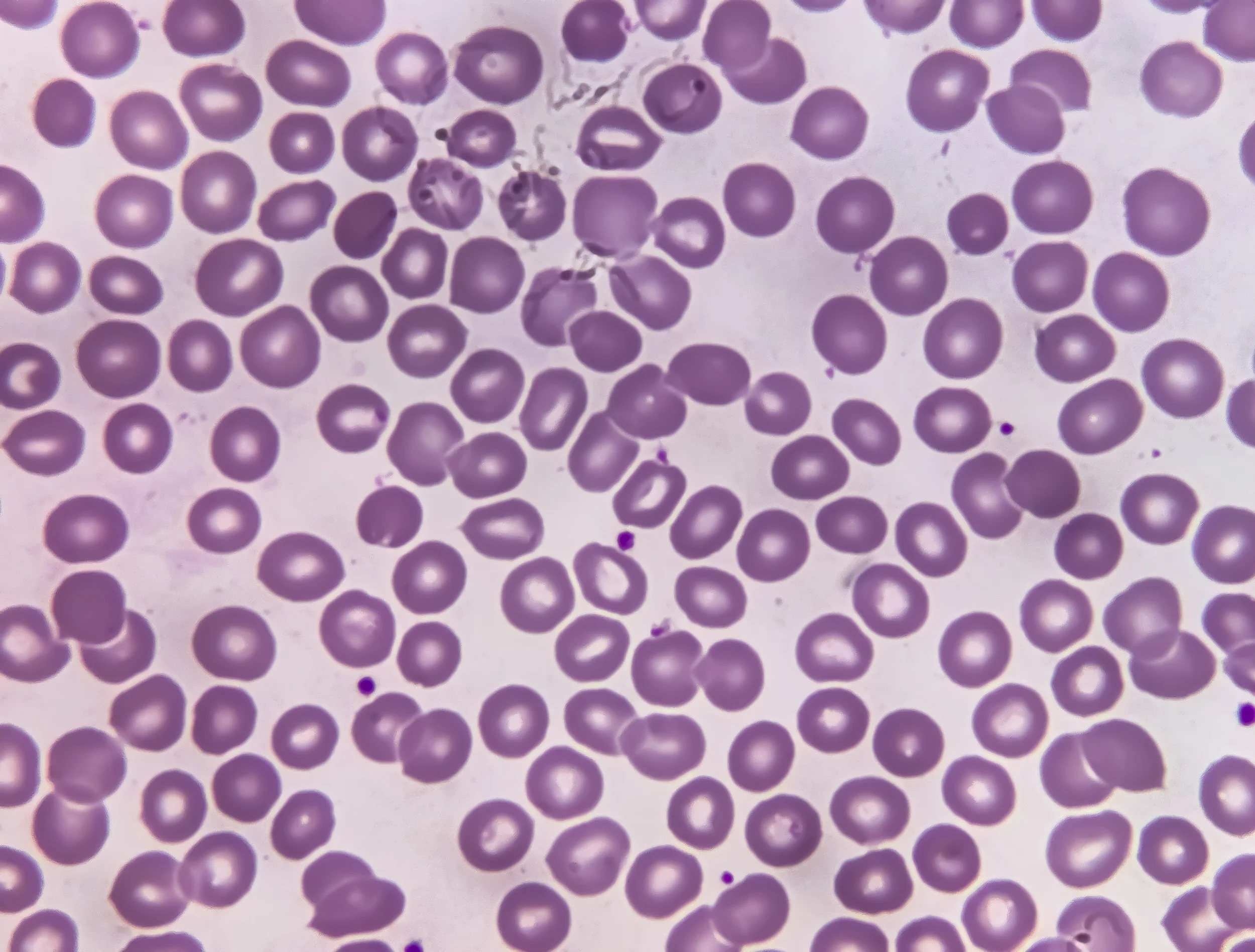
©Ariful Islam | Dreamstime - Blood under a microscope of someone with Immune Thrombocytopenia (ITP)
ITP is an autoimmune disorder where your immune system mistakenly attacks and destroys your platelets, the blood cells responsible for helping your blood clot. Low platelets can lead to bruising, bleeding, fatigue, and a whole host of challenges that most people never see.
It's also something I've lived with for over ten years and my symptoms started when I was a freshman in high school.
At first, it really wasn’t anything dramatic. I wasn't having major bleeding events or spending every day in a hospital bed.
I was just tired. Exhausted, actually.
I played volleyball year-round at the time, and suddenly I felt sluggish all the time. Getting through the day felt harder than it should have. My mom noticed before I did. Looking back, that's probably one of the first things I learned about chronic illness: the people who love you often see the changes before you do.
For months my platelets hovered around 50,000. Then one day, everything changed.
I was sitting in class when I got called down to the office. Someone had lightly grabbed my arm earlier that day to get my attention. Later, I noticed a bruise in the shape of his hand.
At that point, I was covered in bruises from head to toe. My platelet count had dropped dangerously low.
I remember walking into the office and seeing my mom. She looked terrified.
The details blur together now, but I remember her telling me we had to leave immediately for DeVos Children's Hospital. I remember hearing that I wasn't allowed to get into an accident on the drive there.
I remember getting poked over and over while nurses tried to start an IV.
I remember my parents waiting for test results.
Most of all, I remember waiting to find out whether it was "just" ITP or something worse.
When doctors start checking for things like leukemia, your perspective changes pretty quickly.
I was lucky.
My other blood counts were normal. The diagnosis was ITP.
Even now, ten years later, I don't take that outcome for granted, though living with ITP as a teenager was difficult in ways that are hard to explain. The appointments, treatments, steroids, missed school, constant uncertainty.
I was angry, frustrated and I was depressed.
High school was already hard enough without adding a chronic illness to the mix. Looking back, I know I wasn't always easy to be around during that time. I was trying to navigate a body that suddenly didn't work the way it was supposed to. When you lose that sense of control, you spend a lot of energy trying to find it somewhere else.
The hardest part wasn't necessarily the treatments. It was the realization that life wasn't going to work the way I thought it would. Even now, there are days when I get angry. Days when I wonder why some people get healthy bodies and never have to think about platelet counts, medications, bruises, or blood work.
Days when I wish I could wake up feeling rested. Most people take energy for granted, but I don't. I wake up tired more often than not. Caffeine makes me shake, so I mostly just raw-dog life and hope for the best.
The fear never completely disappears either.
A new bruise or low count, sometimes even a medication change. You learn to live with the uncertainty.
But somewhere along the way, I also learned something else.
I'm resilient.
I didn't learn that from motivational quotes, instead I learned it because I had no other choice.
Every treatment, setback, blood draw, appointment– I kept showing up, and eventually, that resilience found its way into every other part of my life. Including my creativity.
Art has been part of my life for as long as I can remember, I was the kid drawing constantly.
In middle school, I had an entire wall covered in mustaches. If you know, you know. Then came colored pencils, Disney characters, portraits, anime drawings, photography, graphic design, printmaking, painting, and eventually the colorful, nature-inspired artwork I create today. Art wasn't born from my illness, but it helped me survive it.
Creating gave me something that chronic illness couldn't take away.
A sense of control, a sense of progress. A place to put my energy when everything else felt uncertain.
These days, creativity looks a little different. Sometimes it's designing or painting, sometimes it's drawing bugs, fish, flowers, or whatever catches my attention that day. I've become far less concerned with perfection than I used to be.
That's something ITP taught me too: You can't control everything and you can't make life perfect. Sometimes all you can do is show up, try something new, make mistakes, and keep going.
That's true in art.
It's true in life.
And it's definitely true when you're living with a chronic illness.
If you found my website because of my artwork, you probably didn't know any of this. You probably saw colorful fish, hand-carved prints, painted rocks, photography, and creative projects. What you didn't see were the years spent learning how to keep moving forward when things felt impossible.
Today, I'm an artist, graphic designer, an award-winning photographer, a small business owner, a pond builder, a rock collector.
A person who still occasionally gets frustrated with her body.
All of those things can be true at the same time.
If I could go back and talk to fourteen-year-old Isabel, I'd tell her something simple: Be a bad bitch.
The people who seem so important right now won't matter nearly as much in a few years. You're going to make beautiful things and find people who love you. At some point, you're going to discover that you really, really like bugs and somehow, despite everything, you're going to be okay.
People often ask if I wish I didn't have ITP.
The honest answer is yes.
I would never choose this. I would gladly take the healthy body.
But after ten years, I also know that ITP shaped me.
It taught me resilience, it taught me perspective, and it taught me how to keep creating even when life gets hard.
ITP took a lot from me.
But somehow, it also gave me everything.
